Whether you love Spotify or hate it (or uncaringly use it because it’s easy and you don’t make a habit of taking strong ethical stances on things that aren’t very important to you — like streaming music so that you’re not sitting in silence), it exists. Let me repeat myself without the parentheses. Whether you love Spotify or hate it, it exists. It exists no matter what you may think of how little they pay artists, or how sneakily they are sneaking in bands that don’t exist so that they don’t even have to pay them too little. It exists even though it’s probably designed first and foremost to track your moods and harvest your data for purposes you can’t even dream of, in ways you can’t imagine.
But I’m not actually here to defend or attack Spotify, nor to even guiltily defend myself for using it since 2012. It seems to me that there are more pressing concerns in the current events of the day for me to also get twisted up over this. I only have so much room on my dining table of earthly concerns.
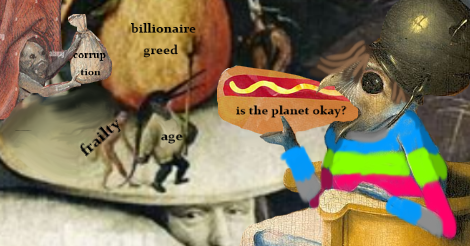
A thing I wasn’t very aware of before Spotify was the enormous array of music genres. If you did not know: the amount of musical genres is vast, far-reaching, and confusing. There are so many! I know we live in an era where people want everything to be defined and categorized, for some reason, but to know all of the music genres would be a full time job. It’s a lifetime career. Take a look at Every Noise At Once and scream in overwhelmed dread with me.
I feel like I might have only been aware of the broadest categories of music until that year everyone was informed on their Spotify Unwrapped that one of their top listened to genres was Escape Room. “Escape Room?” we all wondered. “Are they just making these up now?” Yes, very probably. Escape Room seemed like something a Spotify employee jokingly and randomly called their eclectic playlist one afternoon. I’m willing to bet that’s what actually happened.
It seems like music genres should arise organically as a shared cultural artifact shaped over time by artists, scenes, and fans. The genre names should quietly echo from out of 1000 disparate fan mouths in unison across the globe, unbeknownst to them. And, as that happens, a little aurora of sound shimmers across the thermosphere and the genre name appears on Wikipedia, every music streaming service, and in every existing record store at the same time.
But no. Even before AI was being flagrantly inserted into every facet of the internet, flooding it with a new kind of unasked-for garbage, Spotify was already using machine-mediated curation. And not only them. All of those YouTube channels of “90 Hours Of Lofi Beats To Wile Away Your Week With” surely have the same scheme going. Every time you stream a track called “Liminal Workspace” from a playlist named “Lofi HipHop Beat To Accompany Doing Your Taxes,” and it’s made by someone named something like “schw1zzcore 97” with 2M listeners but no tour history… They’ve got you. You’ve been HAD.
This is all very close to alarming me if I think too hard about it in a certain way, so I will go ahead and end this rambling introduction to what I actually came here to do: Create New Music Genres!
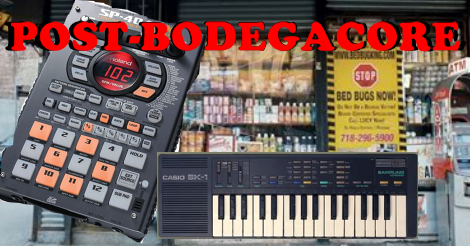
The music equivalent of bad, bright lighting at 3 AM, Post-Bodegacore is a genre rooted in two-block-area nostalgia and ambient consumer malaise. Lyrically non-existent and existentially overburdened, it merges surreal contextless samples of overheard conversations with slowed reggaeton loops and insistent vaportrap. Post-Bodegacore wraps you in the sound of distantly-shared intimacy. The dings of door jingle bells, soft-serve machines whirring, and the rhythmic crinkles of sandwiches being wrapped lull you into an inevitable melancholia that is simultaneously hectic and catchy.

This is medieval escapism created with synthetic wishful-thinking. Hyperpastoral Dungeon Beats draws from dungeon synth and distorted sounds from Instagram nature reels. It’s the sound of a druid’s anxiety dreams filtered through a yellow-green fog. Harpsichords loop over trap hi-hats. Always, there is a hint of a beehive buzzing in and out of focus. Artists in this genre refer to their tracks as “offerings.”

Not just for donkeys, this is a forlornly desaturated subgenre of country-western that strips away any performative common-just-like-you vibes and leaves behind only the skeletal outlines of unpretty addictions and unavoidable sorrow. Drawing equally from outlaw ballads, ambient desolation, and post-crisis Americana, this style croons not to the heart but to the hollow cavity where the heart used to be. Despite its somewhat goofy name, Anhedonky Tonk sounds like listless drifters, empty intersections in opioid-ravaged ghost towns, and cracked rearview mirrors reflecting dilapidated dive bars. If this kind of music already exists, tell the artists that they have a new genre name, please.
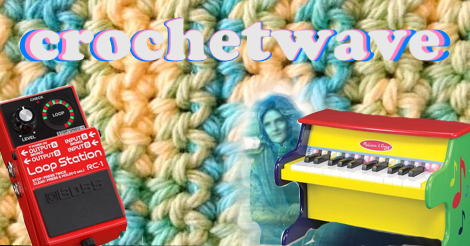
An ultra-domestic subgenre of chillwave and slowcore, Crochetwave is characterized by woven textures of melody, fragile synths, and a cozy sense of handcrafted tenderness. Think patchwork lullabies with a beat for grownups with burnout and a room full of untouched craft supplies. Tracks can stretch for hours, gently unraveling into nothing, like so many evenings spent at home. Crochetwave is music for staying in, for doing nothing, for napping without guilt or stress dreams.
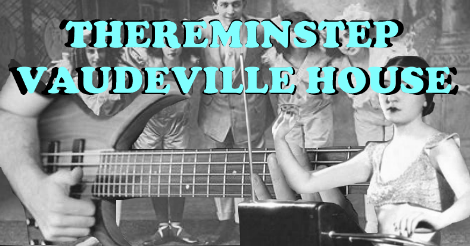
An incredible blend of EDM’s four-on-the-floor rigidity and the slapstick chaos of 1920s vaudeville, this genre insists that the listener shimmies directly into the sort of fun your great-great grandma would be pleased about. Theremins wail like tortured ghosts but never outshine the brass samples. The relentless house beats carry on like tap shoes from forgotten legends. An identifying feature: somewhere in the back of the mixes, sporadically, are samples of old-timey salesmen trying to sell you radium, tobacco products, and ideas of what it is to be a modern youth circa 1924. It is danceable and deeply satisfying.
And there you have it: what will surely be reported as my 5 Top Genres in the 2025 Spotify Unwrapped, just because I unleashed them onto the world. You might have them, too, since you read this!
I would hold high hopes for how wonderful this generated music will be, but realistically it will probably have that same sort of generic haze that makes up every generated playlist I have unwittingly clicked so far.
Maybe the most we can hope for is that it will all be subtly listenable and quickly forgotten.